
Your Tooth Is Screaming at 2am. Here's How to Stop It Without Paying $500.
By Casey Hicks, FNP-BC | Board-Certified Family Nurse Practitioner, Practical Telehealth
Published June 2026 | 9-minute read
"It started as a little ache on Thursday. By Saturday night I was googling 'tooth infection spreading to jaw' at 2am, shaking with fever, my whole face swollen. I couldn't afford the ER. I couldn't get a dentist appointment until Tuesday. I had no idea what to do."
A story that plays out 2.3 million times a year in the United States.
Maybe that is you right now. Maybe it was you last week and you are still limping through it. Maybe your tooth has been "off" for a few weeks and some quiet, anxious part of you knows you are putting something off that you should not.
Here is what nobody tells you when you cannot afford a dentist in America: the infection is the most dangerous part and the infection is the part that can actually be treated quickly, cheaply, and without sitting in a waiting room.
This post explains what is actually happening inside your tooth when it hurts like this, when it becomes genuinely dangerous, and what your real options are, including a $20 telehealth visit that gets a licensed provider to evaluate your case and, when appropriate, send an antibiotic prescription to your pharmacy the same day.

The Numbers That Explain Why You're Here
You are not alone, and you are not being reckless. You are navigating a system that has made routine dental care genuinely unaffordable for tens of millions of people. Here is the scale of it:
72 million Americans have zero dental insurance coverage
54% of adults skipped the dentist last year due to cost, according to the American Dental Association
Out-of-pocket costs account for 38.9% of all dental spending in the US, nearly four times the out-of-pocket share of general healthcare
$450 to $1,650 is what an uninsured patient pays to treat an abscess in a dental office
$20 is the flat cost of a Practical Telehealth evaluation and antibiotic prescription when clinically appropriate
What Your Tooth Is Actually Telling You
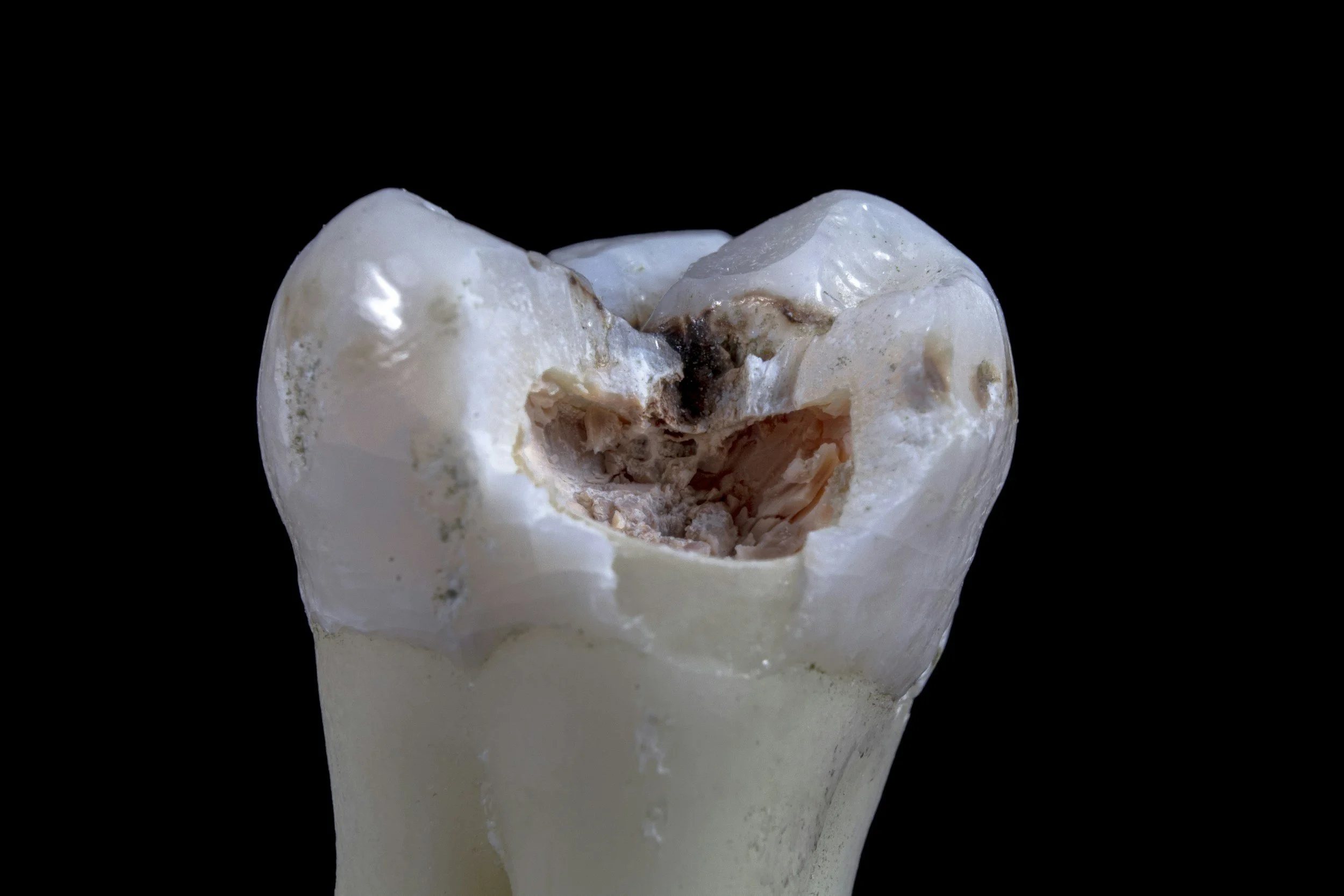
Pain is your tooth's only language. And it uses the same word for wildly different problems, ranging from a minor sensitivity to an infection that can, in rare cases, become life-threatening if ignored long enough.
Here is how to read the stages:
Stage 1: Sensitivity and Early Cavity Pain
A sharp zing when you bite cold or sweet things. No fever, no swelling. The tooth nerve is irritated but bacteria have not broken through into the pulp yet. Still fixable with a filling at this point.
Stage 2: Pulpitis, the Deep Ache Stage
A deep, throbbing ache that does not go away. Worsens when you lie down. Ibuprofen dulls it but does not eliminate it. Bacteria have now entered the pulp, the living nerve tissue inside the tooth. A root canal can still save the tooth here.
Stage 3: Abscess Forming
Swelling at the gumline, a pus pocket, constant throbbing pain that radiates to your jaw, ear, or neck. The infection has killed the pulp and is now trying to escape through the bone. This is where antibiotics become critical. This is also the stage where a telehealth visit makes the most sense.
Stage 4: Spreading Infection (Go to the ER Immediately)
Swelling spreading to your jaw, neck, or eye. Difficulty swallowing or breathing. High fever above 101 degrees Fahrenheit. Feeling systemically unwell. This is a medical emergency. Do not wait. Call 911 or get to an emergency room immediately. Ludwig's Angina and sepsis are possible complications of an untreated spreading dental infection.
WHEN TO SKIP TELEHEALTH AND GO TO THE ER
Telehealth is the right tool for stages 2 and 3. At stage 4, no antibiotic prescription is sufficient on its own. If you have swelling spreading toward your neck, throat, or eye; difficulty breathing or swallowing; a fever over 101 degrees Fahrenheit; or you feel systemically wrong, go to the emergency room immediately. A dental infection can become fatal without in-person intervention.
READY TO STOP THE INFECTION NOW?
Our board-certified nurse practitioner evaluates your symptoms, and if clinically appropriate, sends a prescription to your pharmacy the same day. Flat $20. No insurance. No waiting room. Start your dental visit here.

What Antibiotics Actually Do, and Do Not Do, for a Tooth Infection
This is the part most blog posts skip, and it matters because understanding it helps you make smarter decisions about your next steps.
Antibiotics stop the infection from spreading. They do not fix the tooth.
Think of it this way: you have a broken pipe in your wall. Water is leaking and damaging the structure. Antibiotics are the shop vac. They remove the immediate damage and stop things from getting worse. But the pipe is still broken. You still need a plumber.
The reason this matters: some people take a course of amoxicillin, feel dramatically better after day three, and assume the problem is solved. The pain is gone. The swelling went down. Life is back to normal.
But the tooth is still infected. The infection is dormant, not cured. And it will almost certainly come back, often worse, because the underlying cause has not been addressed.
So what is the honest path forward?
Step 1: Use telehealth to get antibiotics now, to stop the active infection, reduce pain, and prevent dangerous spreading.
Step 2: Use the relief the antibiotics give you to schedule the definitive dental work, either an extraction or a root canal.
Step 3: If cost is the barrier, contact a dental school near you. They offer supervised student care at 30 to 70 percent below private practice pricing.
We will be straight with you: we are not a replacement for a dentist. We are the bridge that stops your infection from becoming an emergency while you figure out how to access dental care. That bridge matters.

What We Can Prescribe and Why It Works
Our licensed providers evaluate your symptoms and medical history, then determine whether a prescription is clinically appropriate. The antibiotics most commonly used for dental infections are:
MEDICATIONS OUR PROVIDERS CAN PRESCRIBE
Amoxicillin -- First-line antibiotic for most dental infections. Highly effective against the oral bacteria responsible for abscesses. Available at most pharmacies for $4 to $12 with a GoodRx coupon.
Clindamycin -- For patients with a penicillin allergy. Equally effective, slightly broader spectrum. Typically $15 to $40 at the pharmacy.
Metronidazole -- Often used alongside amoxicillin for more complex infections. Targets anaerobic bacteria common in deep gum infections.
Pain guidance -- We also advise on safe use of over-the-counter analgesics like ibuprofen and acetaminophen to manage pain while antibiotics work.
The prescription is sent electronically to your preferred pharmacy, usually within hours of your intake being reviewed. You can use GoodRx to compare pharmacy prices in your area and bring the cost of antibiotics down further, often to under $10.

Exactly How the $20 Visit Works
Four steps, from start to prescription:
Step 1: Purchase your visit -- Flat $20. No insurance needed. No hidden fees. Pay once and you are in.
Step 2: Describe your symptoms -- Fill out a short, HIPAA-compliant intake form. Describe your pain, when it started, swelling, fever, and anything else relevant. Photos help but are not required.
Step 3: Provider reviews your case -- A licensed, board-certified provider reviews your clinical picture. They may ask clarifying questions through the secure portal. This is real clinical medicine, not a chatbot.
Step 4: Prescription sent -- If appropriate, your antibiotic prescription is sent electronically to your chosen pharmacy, often within hours. You pick it up and start the same day.
The full platform is HIPAA-compliant. Your health information is encrypted and private throughout the process.
STATES WE CURRENTLY SERVE
Alaska, Arizona, Colorado, Connecticut, Delaware, Hawaii, Idaho, Maine, Maryland, Massachusetts, Montana, Nebraska, Nevada, New Mexico, New York, Oregon, Rhode Island, South Dakota, Utah, Washington, Wisconsin, Washington D.C., West Virginia, and Wyoming.
Not on the list? Contact us directly and we will let you know your options.

The Conversation You Need to Have With Yourself
We know why you are still on the fence. You have been telling yourself the same things thousands of people tell themselves every day.
"It will probably go away on its own."
Some sensitivity does. An abscess does not. Bacteria do not retreat because you wait them out. According to the Centers for Disease Control and Prevention, dental infections are among the most common causes of emergency room visits that could have been treated earlier at far lower cost.
"I can't afford anything right now."
Twenty dollars is not nothing. But it is dramatically different from $500, $1,000, or an ER bill that lands you in medical debt. And the longer an abscess goes untreated, the more expensive the eventual fix becomes.
"I've been taking ibuprofen and it's working."
Ibuprofen reduces inflammation and masks pain. It does not kill bacteria. Your infection is still there, still progressing through the bone, even when the pain feels manageable.
"I don't want to bother a doctor for a toothache."
You are not bothering anyone. This is exactly what telehealth is built for. A $20 visit that stops an infection from spreading is, genuinely, the most practical thing you can do today.

Frequently Asked Questions
Can I really get antibiotics for a tooth infection online without seeing a dentist?
Yes. In the states we serve, our licensed nurse practitioner can evaluate your symptoms through a HIPAA-compliant platform and, when clinically appropriate, prescribe antibiotics. The prescription is the same antibiotic you would get from an ER or urgent care visit, sent to your preferred pharmacy. The key distinction is that our provider makes a real clinical judgment based on your intake. If your symptoms indicate that you need in-person emergency care, they will tell you that clearly instead.
Why is a $20 telehealth visit so much cheaper than urgent care?
Traditional urgent care facilities have significant physical overhead: rent, staff, equipment, billing departments. Our asynchronous telehealth model removes almost all of that. A board-certified provider reviews your intake form and responds through a secure portal, no waiting room, no physical facility, no insurance billing complexity. That efficiency is how we keep it at $20. The clinical quality of the prescription is identical.
How long does it take to get the prescription after I submit?
Most cases are reviewed within a few hours. If a provider needs to ask clarifying questions, you'll receive a message through the portal and the process may take slightly longer. The maximum turnaround is 24 hours. If you are in a fast-deteriorating situation with spreading swelling, high fever, or difficulty swallowing, please go to an emergency room rather than waiting.
The antibiotics worked. Is my tooth infection cured?
No, and this is the most important question in this entire post. Antibiotics control the spread and reduce the active infection. They do not fix the underlying cause, which is a dead or dying tooth pulp or a structural breach that allowed bacteria in. The infection is very likely to return, often more aggressively, if the tooth is not treated definitively. Use the relief from antibiotics to schedule an extraction or root canal. If cost is the issue, dental schools in your area offer supervised care at 30 to 70 percent below private dental prices.
I have a penicillin allergy. Can you still help me?
Yes. Disclose this in your intake form. Our providers prescribe appropriate alternatives for patients with penicillin allergies. Clindamycin is the most common alternative for dental infections and is equally effective. Include all drug allergies and current medications in your intake.
What if my provider says I need in-person care instead?
Then your provider will tell you clearly, and that is an equally valuable outcome. Knowing that something requires in-person intervention could prevent a serious complication. Our providers will not prescribe antibiotics where the clinical picture indicates you need emergency care. They will explain what they are seeing and what your next steps should be. That honesty is part of real clinical care.
YOUR TOOTH WON'T GET BETTER ON ITS OWN
Board-certified provider. HIPAA-compliant platform. Prescription to your pharmacy if appropriate. No insurance, no waiting room. Start your $20 dental visit at practicaltelehealth.org

Other Services from Practical Telehealth
Beyond dental infections, Practical Telehealth offers $20 virtual visits for cold and flu, primary care, mental health, UTI and BV treatment, skin conditions, and more. All through the same flat-fee, no-insurance-required model.
Medical Disclaimer
This blog post is for informational purposes only and does not constitute medical advice. If you are experiencing symptoms that suggest a spreading infection (swelling extending toward your neck, jaw, or eye; difficulty swallowing or breathing; high fever; systemic illness), please seek emergency medical care immediately. Individual clinical suitability for telehealth antibiotic prescriptions is determined by our licensed providers on a case-by-case basis. Not all patients will be appropriate candidates for a prescription through telehealth.
